Understanding the different rules and regulations of the Texas Alcoholic Beverage Commission, or TABC, can be complex. If you need a TABC liquor license or permit in the State of Texas, Ranger Licensing can help you navigate the application and licensing process and ensure that your business meets the law of our great State.
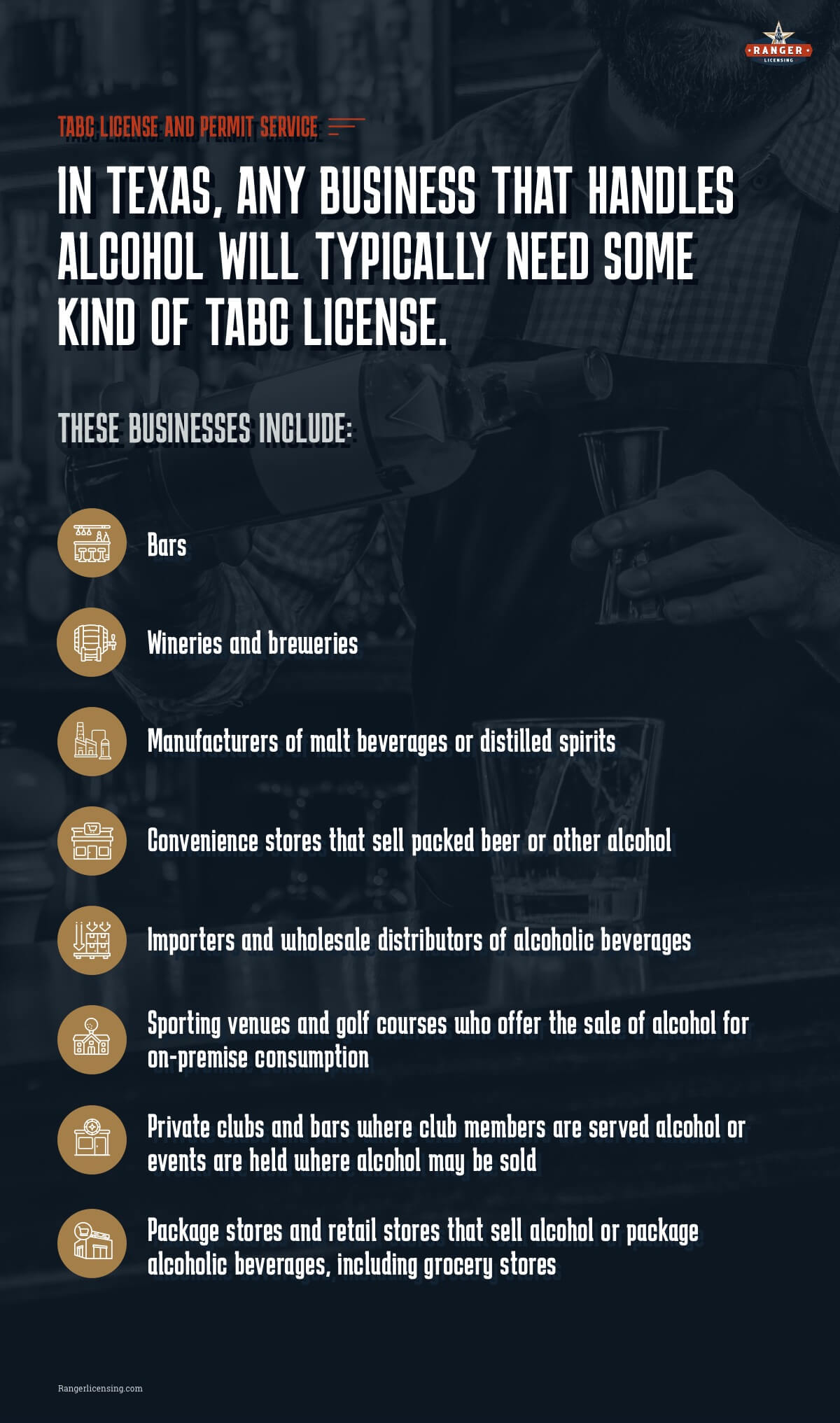
In Texas, any business that handles alcohol will typically need some kind of TABC license or permit. These businesses include:
- Bars
- Restaurant and dining venues with alcohol service or bars
- Manufacturers of malt beverages or distilled spirits
- Importers and wholesale distributors of alcoholic beverages
- Package stores and retail stores that sell alcohol or package alcoholic beverages, including grocery stores
- Sporting venues and golf courses who offer the sale of alcohol for on-premise consumption
- Private clubs where members are served alcohol or where events are held where alcohol may be sold
- Wineries and breweries
- Convenience stores that sell packaged beer or other alcohol
The type of alcohol permits or alcohol licenses you need in Texas depends on the type of business that you are running. If it is a bar or restaurant it’s likely that you will need a retail permit. Additional factors determining the type of license or permit necessary include whether there will be off-premise consumption and the type of alcohol is being served or sold, as different licenses or permits may cover wine and malt beverages while others may cover distilled liquor, for example.
On the other hand, if you plan to manufacture alcoholic beverages, such as craft beers or malt beverages, you will likely need a manufacturer’s permit to do so in Texas. Below we will go through different alcohol license and permit types to help you decide which ones are right for the needs of your business as well as the reasons you may need a license or permit.
When Do You Need a TABC Permit or License?
If your business or organization wants to sell liquor, malt beverages, or other alcoholic beverages in the State of Texas, then you will need one or more TABC license or permit. While licenses and permits can sometimes be interchangeable, the general rule is that a license is permanent while a permit is usually temporary and often carries more restrictions to sell alcohol.
Under certain circumstances, alcohol may be consumed at your business even without a license or permit. If your business does BYOB (Bring Your Own Beverage) or provides free alcohol to customers, then you likely will not need to become license or permit holders. However, please note that “free” alcohol must have no strings attached: for example, it cannot be a free drink with the purchase of a meal.
Additionally, if your business currently gives away free alcohol, it will not be able to do so after acquiring a TABC license or permit. There are some limited exceptions to this, that will be noted among the restrictions and regulations of your permit.
What Is the Cost?
Once an application is complete and approved, you will have to pay for the license or permit. Each permit or license for alcohol sales will have a different Texas state fee associated with it. These fees range from a few hundred dollars to several thousand dollars a year. The fee schedules are posted on the TABC website, the best place to look for the most up-to-date information on fees.
In addition to this cost, you will also have to pay city and county fees. These fees are based on your location, or proposed location, and may be as high as half of the cost of your Texas state fees.
Keep in mind that the application itself has a processing and administration fee that you must pay when you submit your completed application. This fee does not go towards your state, city, or county fees.
Finally, licenses and permits must be renewed. This schedule will be determined by the type of license or permit that you have, and typically will have the same fee of state, city, and county fees that you originally paid.
How to Apply for a Texas Alcoholic Beverage Commission Permit or License
Once you have determined what type of TABC license or permit you need, you will then start the application process. This process involves a few key steps but begins by assessing your eligibility for a TABC license.
Eligibility Requirements
- Age: Applicants must be 21 years of age or older
- Clean criminal record: Applicants may not have had a felony conviction within the last five years
- No tier interference: Applicants may not have any vested interest in a TABC permit inside a different tier system
- No recent moral turpitude violations: Applicants cannot have had any moral turpitude violations within the six months prior to applying
- If you meet the eligibility requirements, you will then move on to the actual application process itself.
Application Steps
- Make sure you have chosen the correct license or permit type for your business
- Obtain the requisite certifications from the city, county, comptroller, and the TABC bonds
- Create an account on AIMS (Alcohol Industry Management System)
- Apply for your license, you will receive a tracking number which you should keep somewhere secure and where you will be able to easily access it for reference
- Complete the TABC licensing course, the course will differ depending on the licensing type but each typically contains several modules
- Submit your completed application
- Pay the application fee
Once you have submitted the application and paid the fee, you will now have some waiting time. The review process can take a while as all of your information will need to be thoroughly checked. This process can take anywhere from several weeks to several months. Your tracking number can be used to check the status of your application at any time. After this period, as long as your application is authorized, you will now be license permit holders.
What Do You Need to Sell Alcoholic Beverages?
It is likely if you operate a business or bar, or are part of the alcoholic beverage industry in Texas, that you will need a primary permit for alcohol sales. In some cases, though, you may need a more specific or temporary permit as well, such as for an event where you will be serving alcoholic beverages. We will cover different types below.
Remember that each license and permit covers different criteria for where you can serve alcohol or where sold alcohol must be consumed. If you have a restaurant, and do not want to offer to-go alcoholic drinks to your customers, then you would to be covered for on-premise consumption. On the other hand, if you want to be able to serve alcohol drinks to-go in Texas, then you would need one that authorized the sale of alcohol for both on- and off-premise consumption. These distinctions for premises are important, and it is why it is essential to know ahead of time exactly what you wish to do with your business model in terms of how you serve and sell alcoholic beverages to customers.
It’s important to note that some licenses and permits have had recent changes in their restrictions and regulations. Additionally, you may not be eligible for many of these licenses if you are based in dry areas of Texas.
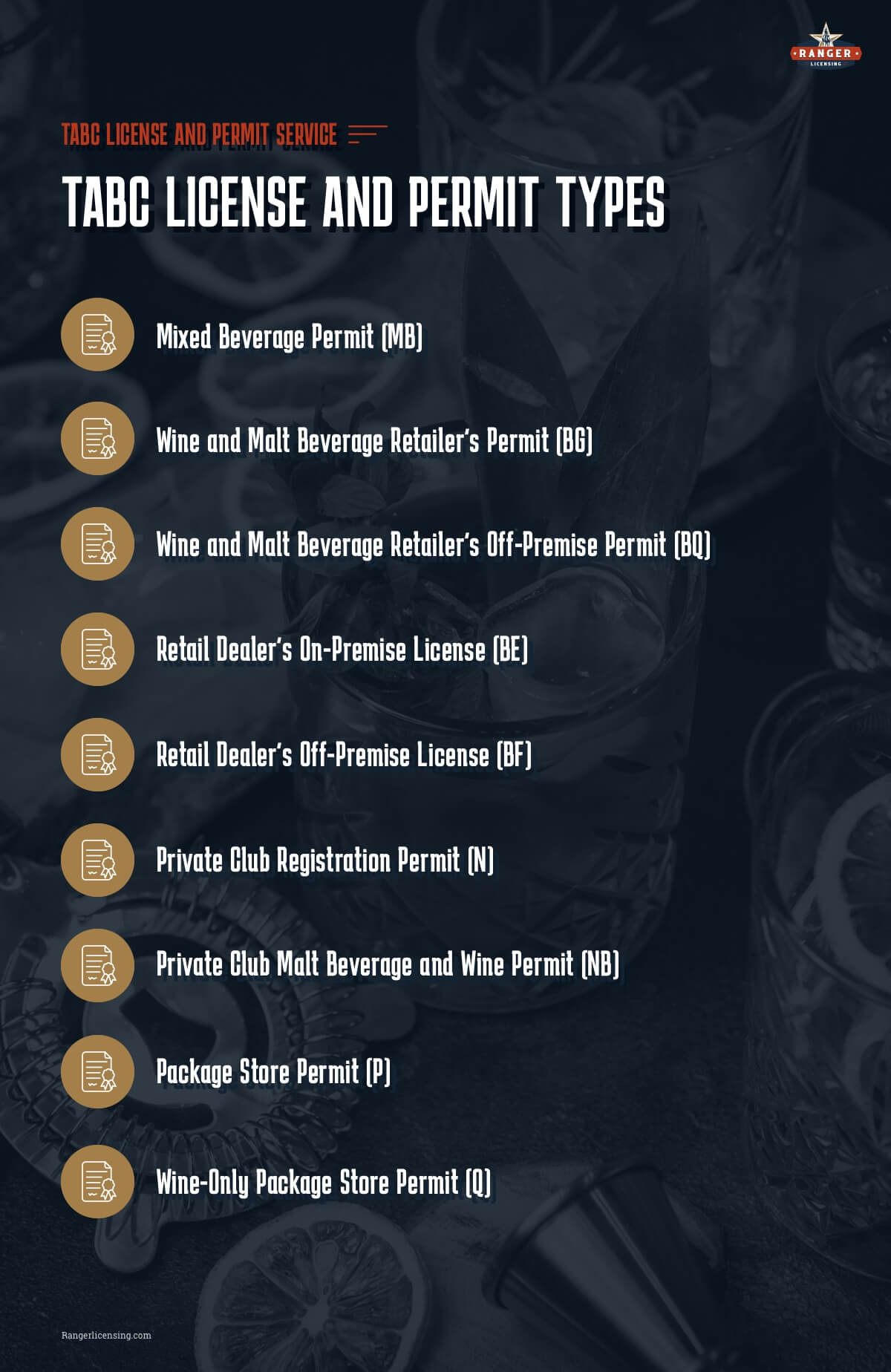
TABC Retail Licenses and Permits for the Alcoholic Beverage Industry
TABC Retail Permits authorize alcohol sales or serving alcoholic beverages on or off the premises of a building depending on the specific permit or license obtained. These are likely the type of license or permit that you would need if you plan to sell beer or malt beverages, wine, liquor, or mixed drinks at your establishment such as if you own a restaurant, club, or a bar. Remember that there is a distinction between on- and off-premise consumption.
It’s important to note distinctions between each type of permit or license, as each may cover different aspects of serving alcohol and selling alcoholic beverages to be consumed on or off the premises of your business. For example, if you are planning on having a full bar at your establishment, then you will likely need a Mixed Beverage Permit which allows for the sale of wine and malt beverages, as well as distilled spirits. If you would like for the allowance of off premise consumption, then may need the Retail Dealer’s Off-Premise License. Whereas, if you are opening a wine bar in Texas, you likely just need the Wine and Malt Beverage Retailer’s Permit.
If you are unsure of the exact type of license needed for your business or for serving alcohol to private club members, then Ranger Licensing can talk through the options with you. Below is a list of licenses and permits specific to retail:
- Mixed Beverage Permit (MB)
- Wine and Malt Beverage Retailer’s Permit (BG)
- Wine and Malt Beverage Retailer’s Off-Premise Permit (BQ)
- Retail Dealer’s On-Premise License (BE)
- Retail Dealer’s Off-Premise License (BF)
- Private Club Registration Permit (N)
- Private Club Malt Beverage and Wine Permit (NB)
- Package Store Permit (P)
- Wine-Only Package Store Permit (Q)
TABC Manufacturing Permits
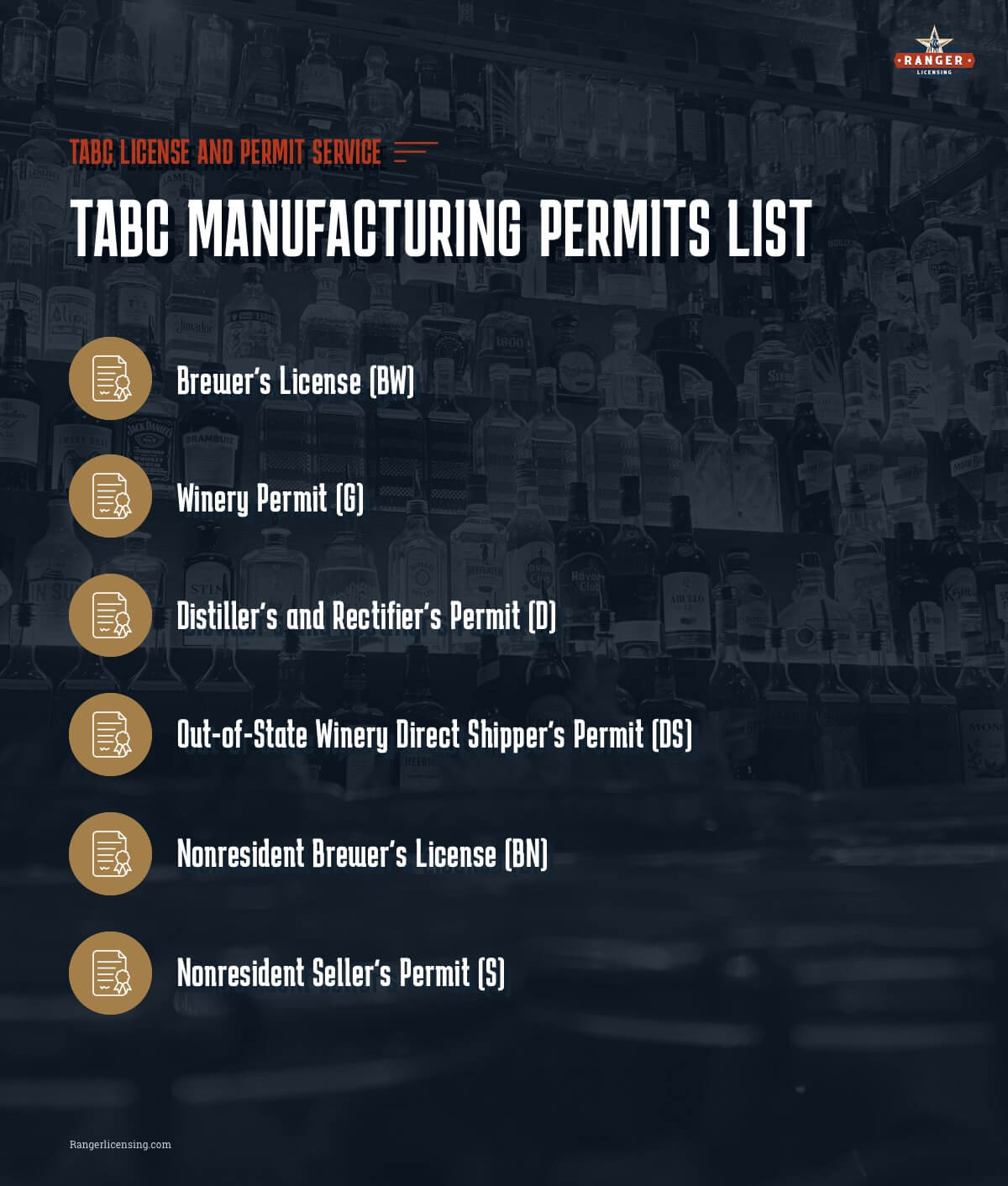
These permits allow for the manufacturing of distilled spirits, wine, or malt beverages for sale. Each permit has its own specifications and regulations. Below is a list of licenses and permits specific to the manufacturing of alcoholic drinks that may be applicable to your business:
- Brewer’s License (BW)
- Winery Permit (G)
- Distiller’s and Rectifier’s Permit (D)
- Out-of-State Winery Direct Shipper’s Permit (DS)
- Nonresident Brewer’s License (BN)
- Nonresident Seller’s Permit (S)
TABC Distribution Permits
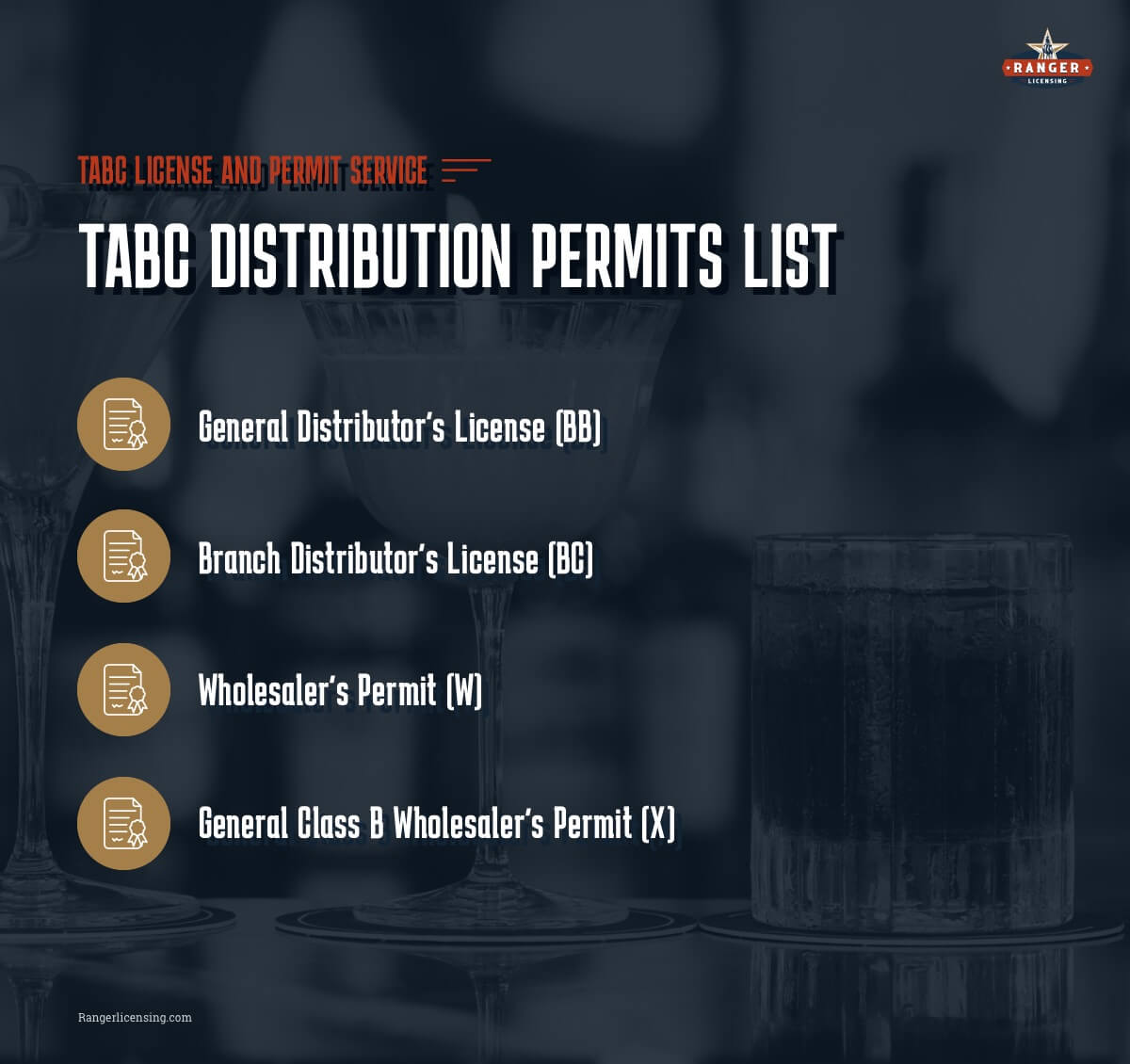
TABC Distribution Permits authorize the distribution of alcoholic beverages. These licenses and permits are likely what you will need if you are the owner of a business that (1) sells alcoholic beverages directly to consumers or other businesses, such as a grocery store that also sells beer or distilled spirits, a liquor store, or (2) sells alcoholic beverages to operations that are licensed to sell them directly to consumers. Below are these specific licenses and permits:
- General Distributor’s License (BB)
- Branch Distributor’s License (BC)
- Wholesaler’s Permit (W)
- General Class B Wholesaler’s Permit (X)
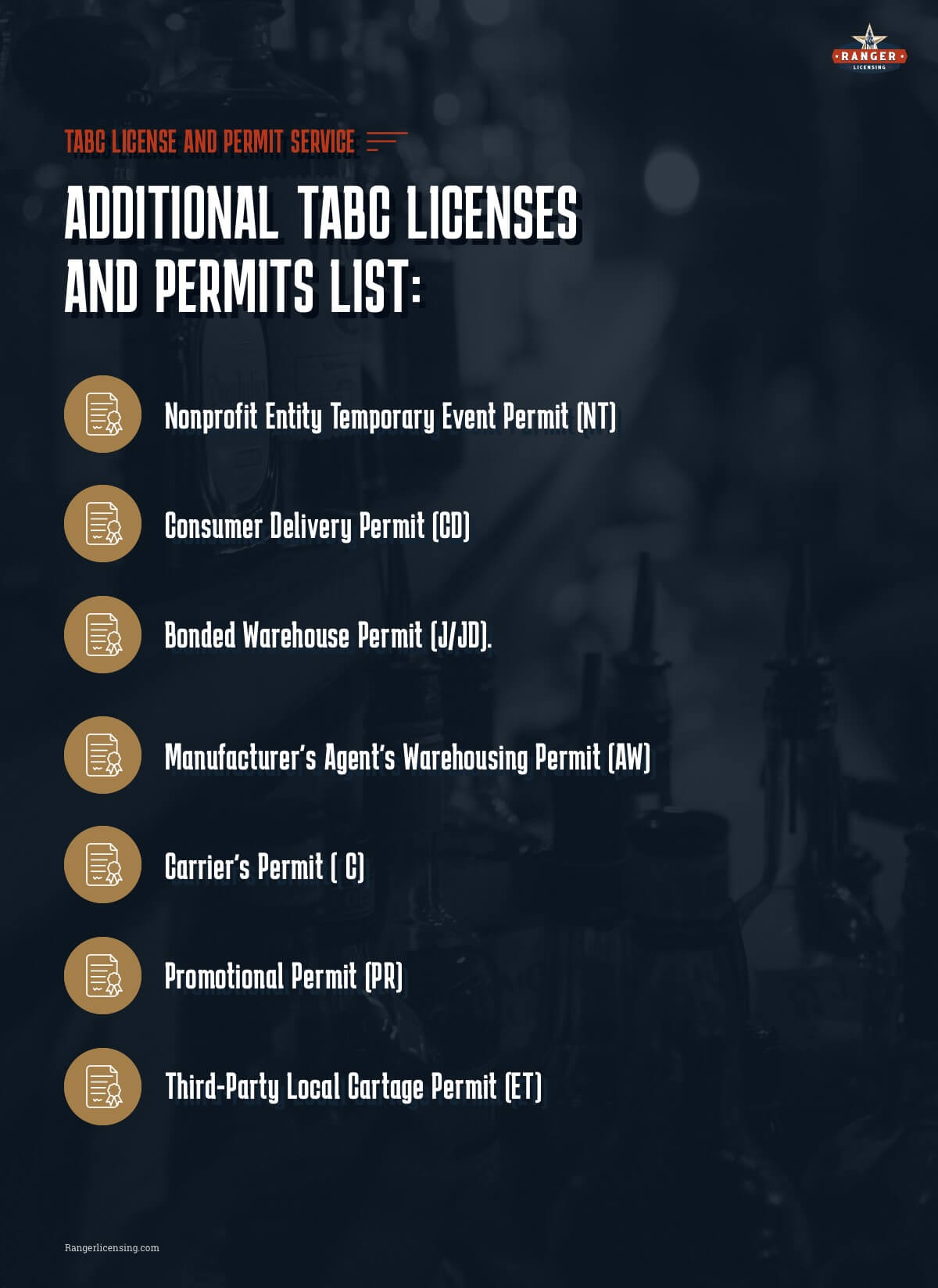
Additional TABC Licenses and Permits
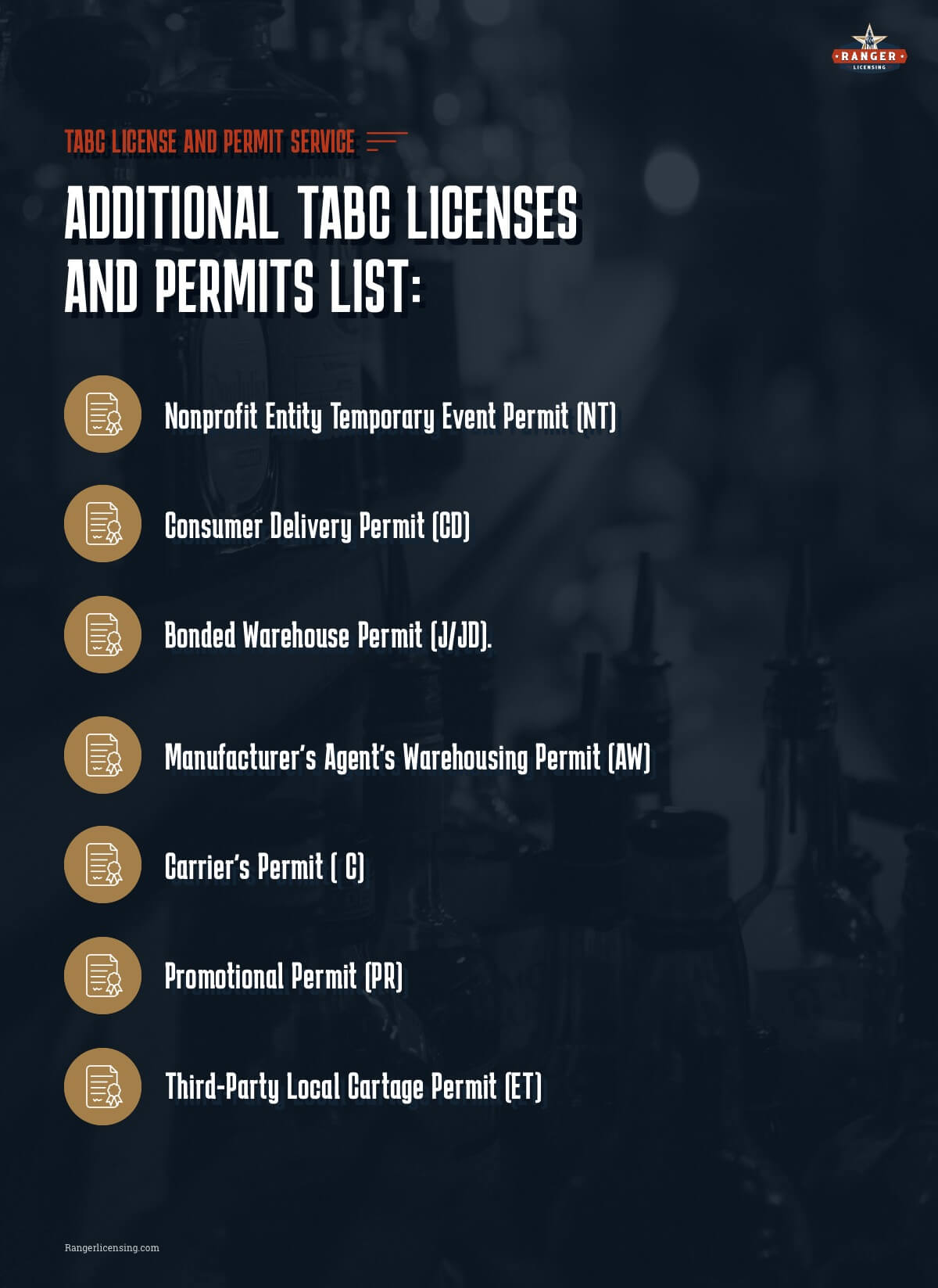
If your Texas business is not covered by the above permits or licenses, or needs additional authorizations, then some of the following licenses or permits may apply to you:
- Nonprofit Entity Temporary Event Permit (NT)
- Consumer Delivery Permit (CD)
- Bonded Warehouse Permit (J/JD).
- Manufacturer’s Agent’s Warehousing Permit (AW)
- Carrier’s Permit ( C)
- Promotional Permit (PR)
- Third-Party Local Cartage Permit (ET)
TABC Subordinate Licenses and Permits
If you are already licensed or permitted under TABC, you may need additional licenses or permits at certain times or for specific reasons. Please note that subordinate permits and licenses cannot exist on their own and can only be added on to existing permits or licenses in Texas. The below licenses and permits may apply to these additional specific needs.
- Brewer’s Self-Distribution License (SD)
- Forwarding Center Authority (FC)
- Brewpub License (BP)
- Water Park Permit (WP)
- Local Distributor’s Permit (LP)
How Can Ranger Licensing Help?
Ultimately what your business needs in regard to TABC permits and licenses will depend on your business itself and the type of alcohol you want to sell. The application process and ensuring that you meet all eligibility requirements can be complex to navigate, so having a Texas professional to help you can alleviate a lot of the stress and confusion by ensuring that all steps are correctly followed.
Ranger Licensing is ready to help you through the application process for your license or permit. Based out of Houston, Texas, we proudly serve Texas businesses in Houston, Dallas, San Antonio, Austin, El Paso, and surrounding areas.
Ranger specializes in helping businesses navigate the application process. We also offer legal services including purchase and sale agreements of businesses holding TABC permits. We have worked with a variety of businesses including bars, nightclubs, restaurants, hotels, breweries, wineries, distilleries, package stores, and wholesalers, to ensure that their licensing application is as worry-free as possible.
For help with your license or permit, please reach out to us at (713) 881-9009 for a free consultation or through our Contact Form.